Stretching is a simple way to add movement to your day. It requires little space, no special equipment, and can be adapted to almost any fitness level. A regular stretching routine may help you move more comfortably, improve flexibility, and feel less stiff after sitting or exercising.
If you are new to stretching, the most important step is to begin slowly. You do not need to touch your toes or hold difficult poses to benefit. With consistent practice, your range of motion can gradually improve.
Why Stretch at Home?
Home stretching is convenient and easy to fit into your schedule. You can stretch in the morning, during a work break, after a walk, or before bed. Even five to ten minutes can help you become more aware of how your body feels.
Stretching may help you:
– Improve flexibility and range of motion
– Reduce feelings of stiffness
– Prepare your body for physical activity
– Cool down after exercise
– Relax your body and mind
– Build a consistent movement habit
Stretching is not a competition. The goal is to create gentle tension, not discomfort.
Before You Begin
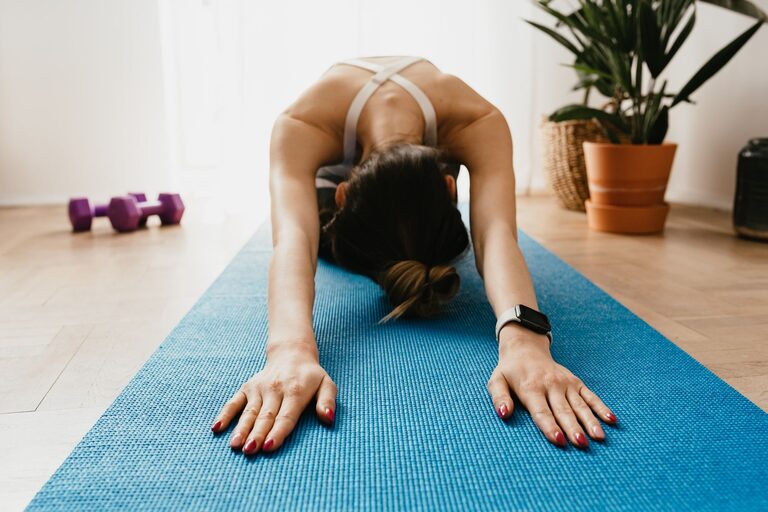
Choose a clean, comfortable space where you can move freely. A yoga mat, carpet, or folded towel can make floor exercises more comfortable, but these items are optional.
Wear clothing that allows easy movement. Loose or stretchy clothes are usually a good choice. You may also want to keep a glass of water nearby, especially if you are stretching after a workout.
Before deeper stretching, warm up your body with a few minutes of light movement. Try walking around the room, gently swinging your arms, or marching in place. Warm muscles are generally more prepared for movement than cold muscles.
Basic Safety Tips
Keep these guidelines in mind:
– Move slowly and avoid bouncing.
– Breathe steadily throughout each stretch.
– Stop if you feel sharp, sudden, or worsening pain.
– Stretch to a mild pulling sensation, not strong discomfort.
– Keep your movements controlled.
– Avoid forcing a joint beyond a comfortable range.
– If you have an injury or a health concern, ask a qualified professional for guidance before starting.
Static and Dynamic Stretching
There are two common types of stretching: dynamic and static.
Dynamic Stretching
Dynamic stretching uses slow, controlled movements. Instead of holding one position, you move gently through a comfortable range. Examples include arm circles, leg swings, and walking lunges.
Dynamic stretches are often useful before exercise because they help you prepare to move. Keep the movements smooth and avoid swinging with force.
Static Stretching
Static stretching involves moving into a position and holding it for a period of time. Examples include a seated hamstring stretch or a standing calf stretch.
Static stretches are often included after exercise or during a separate flexibility session. Beginners can start by holding each stretch for about 15 to 30 seconds. Over time, you may feel comfortable holding positions for longer.
A Simple Beginner Stretching Routine
The following routine takes about 10 minutes. Perform each stretch gently, and repeat on both sides when needed.
1. Neck Relaxation Stretch
Sit or stand tall with your shoulders relaxed. Slowly tilt your right ear toward your right shoulder. Keep your face pointing forward, and avoid lifting the shoulder toward your ear.
Hold for 15 to 20 seconds, then return to the center. Repeat on the other side. You can also gently turn your head to look over each shoulder.
Do not pull on your head or make fast circular movements with your neck.
2. Shoulder and Upper Back Stretch
Reach both arms forward and interlace your fingers. Turn your palms away from you and gently round your upper back. Let your shoulders move forward while keeping your neck relaxed.
Hold for 15 to 30 seconds. This stretch can feel helpful after working at a desk or using a phone.
3. Chest Stretch
Stand near a doorway. Place your forearms or hands on the door frame, with your elbows at a comfortable height. Step forward slowly until you feel a gentle stretch across your chest and the front of your shoulders.
Hold for 15 to 30 seconds while breathing normally. Avoid leaning so far that you feel pressure in your shoulders.
4. Standing Side Stretch
Stand with your feet about hip-width apart. Raise your right arm overhead and slowly lean to the left. Keep both feet grounded and avoid twisting your body.
Hold for 15 to 20 seconds, then switch sides. You should feel a gentle stretch along the side of your body.
5. Standing Quadriceps Stretch
Use a wall or chair for balance if needed. Bend your right knee and bring your heel toward your seat. Hold your ankle or the lower part of your pant leg, keeping your knees close together.
Hold for 15 to 30 seconds, then switch legs. Keep your torso upright and avoid pulling your foot too strongly.
6. Calf Stretch
Stand facing a wall and place both hands against it. Step your right foot back, keeping the heel on the floor and the toes pointing forward. Bend your front knee slightly while keeping the back leg comfortable and controlled.
Hold for 20 to 30 seconds, then switch sides. Adjust the distance between your feet to change the intensity.
7. Seated Hamstring Stretch
Sit on the floor with one leg extended and the other leg bent comfortably. Keep your back as straight as possible and slowly reach toward the extended leg.
You do not need to reach your toes. Stop when you feel a mild stretch along the back of your thigh. Hold for 15 to 30 seconds, then switch sides.
8. Hip Stretch
Lie on your back with both knees bent and your feet on the floor. Bring your right knee toward your chest and hold behind the thigh or over the shin. Keep your left foot relaxed on the floor.
Hold for 15 to 30 seconds, then switch sides. Keep your shoulders relaxed and avoid pulling the knee aggressively.
How Often Should You Stretch?
Consistency is more useful than long, occasional sessions. Try stretching for five to ten minutes most days of the week. You can also stretch for 15 to 20 minutes several times a week.
A simple schedule might look like this:
– Morning: gentle neck, shoulder, and side stretches
– Before exercise: light dynamic movements
– After exercise: relaxed static stretches
– During work breaks: standing and upper-body stretches
– Evening: calm stretches with slow breathing
You may notice small changes within a few weeks, but flexibility often develops gradually. Focus on regular practice rather than quick results.
Common Beginner Mistakes
Some habits can make stretching less comfortable or less effective. Avoid bouncing in a stretch, since quick movements can place unnecessary stress on your muscles and joints. Do not hold your breath or compare your flexibility with someone else’s.
It is also easy to stretch too intensely. A stronger sensation is not always better. Gentle, controlled practice is usually a better starting point.
Finally, avoid stretching only one area. Include your neck, shoulders, back, hips, legs, and ankles for a more balanced routine.
Make Stretching a Lasting Habit
Attach stretching to an activity you already do, such as brushing your teeth, taking a walk, or finishing your workday. Keep your mat or comfortable clothes where you can see them, and begin with a routine that feels manageable.
You can play calm music, follow a timer, or keep a simple record of your sessions. The best routine is one you can repeat comfortably.
Stretching at home does not need to be complicated. Start with gentle movements, breathe steadily, and give your body time to adapt. With regular practice, a few minutes of stretching can become an easy and enjoyable part of your daily routine.