When the seasons change, storing clothing can make room in your closet and keep your home organized. The right storage method also helps protect garments from dust, moisture, fading, wrinkles, and pests.
Seasonal clothing does not need to take over your closet, attic, or spare room. With a few simple habits, you can pack items neatly, find them easily, and keep them in good condition until you need them again.
Start by Sorting Your Clothes
Before putting anything away, take all seasonal clothing out of your closet, drawers, and laundry baskets. Sort each item into a few basic groups:
– Keep for next season
– Donate or give away
– Repair or alter
– Recycle if it is no longer usable
– Wash before storing
This is a good time to check whether you actually wore each item during the season. If something no longer fits, feels uncomfortable, or does not suit your everyday style, storing it for another year may only create more clutter.
Set aside clothing that needs simple repairs, such as missing buttons, loose hems, or broken zippers. Complete the repairs before storage so the item is ready to wear later.
Clean Everything Before Storage
Always clean seasonal clothes before packing them away. Even small traces of sweat, food, body oils, or perfume can create stains and unpleasant odors over time.
Follow the care label on each garment. Wash or dry-clean items as recommended, and make sure they are completely dry before storing them. Damp clothing can lead to mildew, especially in sealed containers.
Pay extra attention to:
– Coats and jackets
– Sweaters and knitwear
– Scarves and hats
– Swimwear
– Wool and other natural fibers
– Clothing with visible stains
Avoid storing clothes straight from the dryer if they are still warm or slightly damp. Let them cool and dry fully in a clean area before folding or packing.
Choose the Right Storage Containers
The best container depends on the type of clothing and where you plan to store it. Use sturdy, clean containers that protect garments from dust and accidental spills.
Plastic Storage Bins
Plastic bins with secure lids are useful for most folded clothing. They stack neatly and provide protection in closets, under beds, or on shelves. Choose clear bins when possible, so you can see what is inside without opening every container.
Do not pack bins so tightly that clothing becomes crushed. Leave a little room so items can breathe and remain easy to remove.
Fabric Storage Bags
Breathable fabric bags work well for sweaters, coats, and other garments that benefit from air circulation. They are especially useful for storage in a dry indoor closet.
Make sure fabric bags are made from clean, durable material. Avoid using bags that have been stored in a damp place or have a strong odor.
Vacuum Storage Bags
Vacuum bags can save space by compressing bulky items such as puffer coats, blankets, and ski clothing. However, they are not ideal for every garment. Long-term compression may flatten some materials or create deep wrinkles.
Use vacuum bags mainly for durable, padded items. Avoid them for delicate fabrics, structured clothing, leather, and garments that need ventilation.
Cardboard Boxes
Cardboard boxes are easy to find, but they are less protective than plastic or fabric containers. They can absorb moisture and may not keep out dust or pests. If you use cardboard, choose clean, sturdy boxes and store them in a dry indoor area.
Fold Clothing Carefully
Different fabrics and shapes need different folding methods.
Fold cotton shirts, casual pants, pajamas, and lightweight clothing into compact rectangles. Place heavier items at the bottom of a container and lighter items on top.
For sweaters and knitwear, fold them instead of hanging them. Hangers can stretch the shoulders and create unwanted bumps. Fold sweaters loosely and avoid placing too many heavy pieces in one stack.
Use tissue paper between delicate or easily wrinkled items. This can reduce friction and help garments keep their shape. Avoid newspaper because ink can transfer to fabric.
If you are storing special-occasion clothing, fold it carefully and place it in a breathable garment bag. For structured pieces that must be hung, use wide, padded hangers and leave space between garments.
Protect Shoes and Accessories
Shoes should be cleaned and dried before storage. Remove dirt from soles and surfaces, then allow the shoes to air out completely. Stuff boots and shoes with plain tissue paper or clean shoe inserts to help them keep their shape.
Store shoes separately from clothing when possible. Shoe boxes, clear containers, or fabric shoe bags can help prevent dust and scuffs.
Small accessories can be easy to lose, so group them by type:
– Keep scarves together
– Place gloves and hats in one container
– Store belts in a drawer or hanging organizer
– Keep swimwear in a breathable pouch
– Place costume jewelry in separate compartments
Avoid storing leather shoes or accessories in airtight plastic for long periods. Breathable storage helps reduce the chance of trapped moisture.
Label Every Container
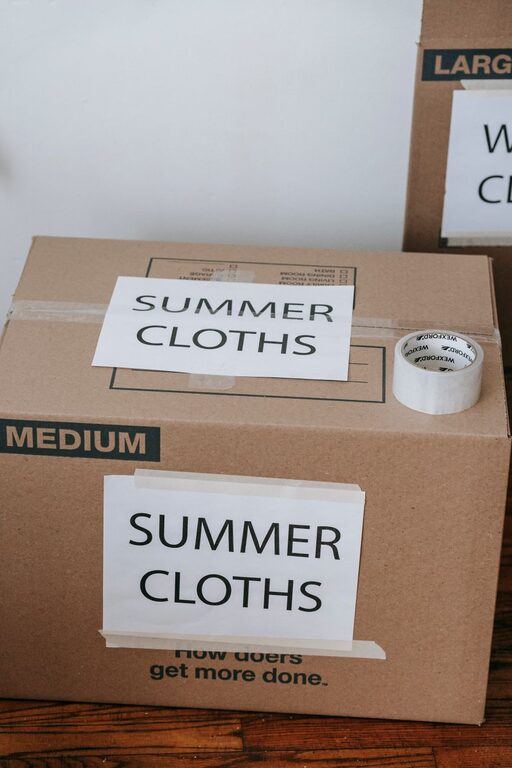
Clear labels make seasonal changes much easier. Write a simple description on each box, such as “Winter sweaters,” “Beach clothing,” or “Rain jackets.”
You can also include a short list of contents on the label. For example:
– Wool sweaters
– Thermal shirts
– Scarves
– Gloves
Use labels on the top and front of each container if the boxes are stacked. If you prefer digital organization, take a quick photo of the contents and save it in a note on your phone.
Pick a Safe Storage Location
Store seasonal clothes in a cool, dry, and clean location. Avoid areas with large temperature changes or a risk of water leaks.
Good storage locations may include:
– The top shelf of a bedroom closet
– Under-bed storage drawers
– A dry wardrobe
– An interior closet
– A clean storage bench
Be careful with basements, garages, attics, and sheds. These areas may become too hot, cold, humid, or dusty. If you must use one of these spaces, raise containers off the floor and keep them away from walls with signs of moisture.
Do not place heavy boxes on top of delicate clothing. Stack containers by weight, with the heaviest boxes at the bottom.
Refresh Clothes Before Wearing Them Again
When the season returns, remove stored clothing early enough to inspect everything. Open containers in a well-ventilated area and check for odors, stains, moisture, or damage.
Wash or air out items as needed before placing them back in your closet. This is also a useful time to repeat the sorting process. If you did not wear an item during the previous season, consider whether it still belongs in your wardrobe.
Make Seasonal Storage a Routine
Efficient clothing storage works best as a regular habit rather than a once-a-year project. Choose one or two days each year for seasonal changes, and keep your containers, labels, and cleaning supplies together.
A simple routine can help:
- Remove clothing from the closet.
- Sort items and set aside donations or repairs.
- Clean and dry everything being stored.
- Fold or hang garments correctly.
- Pack items by category.
- Label each container.
- Store containers in a dry, accessible location.
- Record special items with a quick photo or list.
With consistent sorting and suitable containers, seasonal clothes can stay protected, organized, and easy to find. The result is a less crowded closet and a smoother transition whenever the weather changes.